When the father and son team of Wilhelm and Karl Maybach took the first car bearing their name to the 1921 Motor Show in Berlin, Maybach became established as a luxury brand which exploits all technological possibilities to the fullest. Their cars would not be cars for the common man, but for those of great wealth and discriminating taste. And the design genius behind the Maybach, was a homeless orphan.
It was in the summer of 1865 in Reutlingen, Germany, at an institution with adjoining production facilities built and run by orphans and the homeless, for orphans and the homeless, that Wilhelm Maybach caught
the attention of the workshop manager, Gottlieb Daimler. Daimler, who founded Daimler-Motoren-Gesellschaft (DMG), a company which later merged and became Daimler-Benz, watched the nineteen year old Maybach produce an endless stream of design drafts for manufacturing machines, scales and farming implements.
The close bond between Maybach and Daimler was fueled by Wilhelm’s need for a father figure after being tragically orphaned at ten, and Daimler recognizing Maybach's potential as a designer. This was the beginning of a partnership that would last thirty five years and bring about many automotive innovations, like the four stroke engine in 1876 and the first fast running engine with a vertical cylinder run on petrol with Maybach's float carburetor design. In 1889, Maybach developed a water-cooled, two-cylinder, V-type engine and then a four-seater belt-driven car by 1899. In 1900, the same year of Daimler’s death, Maybach designs the Mercedes, which many have claimed was the first “real car”.
2010 maybach 136
 2010 maybach 136
By 1907, Maybach had left DMG and he, and his son Karl, became interested in airship travel after the 1908 crash of the LZ4 Zeppelin, powered by a Daimler engine. When the Maybach men presented their ideas of a new engine to Count Zeppelin, the Count's response was to start his own engine firm, with Karl Maybach as technical director.
After ten years with many successes and innovations in engine design which enabled airships to make regular passenger flights that covered greater distances, Wilhelm and Karl Maybach acquired a forty percent stake in Zeppelins company and turned their interest back to automobiles. They changed the company’s name to Maybach-Motorenbau GmbH and began designing a car based on a Mercedes-Benz chassis. Within two years the car evolved into the Maybach Type W3 and made its debut at the Berlin Motor Show in 1921.
It was in 1929 that the Maybach Type Zeppelin DS 8 was unveiled. It was powered by a twelve cylinder engine with the same basic configuration as the Maybach engines used in the 'Graf Zeppelin' airships, and was capable of reaching a top speed of 93 mph. But it wasn’t just the power plant that made these cars so special. Maybach crafted each car by hand and set the highest standards of luxury for every car they produced. About 1800 Maybachs were built in their twenty years of production. In 1941, the company shifted its focus and began manufacturing engines for military, marine and rail purposes to support the war effort.
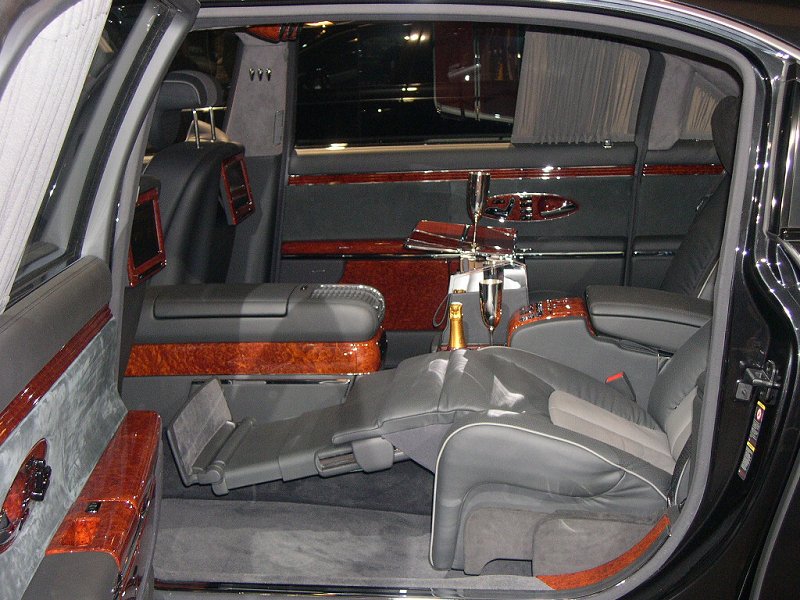
Building on Maybach’s tradition of quality, DaimlerChrysler resurrected the Maybach brand in 2003 for its new line of ultra luxury vehicles. Ordering a Maybach can be compared to the purchasing of a yacht. Each vehicle is hand made to the customer’s specifications with over one million possible configurations.
We saw a 2006 Maybach 57S powered by a 6.0 litre V12 biturbo engine for sale online the other day for $380,000.00 – makes you wonder what the car sold for when it was new.
 Maybach Best For Me
 Maybach Togather Car
 2010 maybach 136

 Maybach-Landaulet-12
 maybach landaulet
 maybach landaulet 01
 maybach1 landaulet
  Maybach Landaulet Study 3
 Maybach Landaulet 02
 maybach landaulet
 maybach landaulet 3 11 07
 maybach exelero
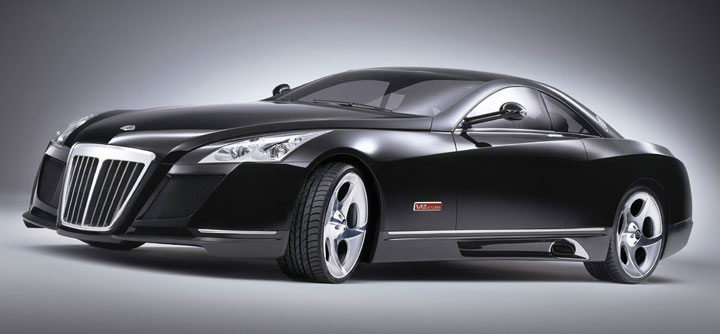 maybach exelero
 maybach08
 2009 maybach landaulet
 maybach landaulet 02
 maybach interior
 Maybach 136